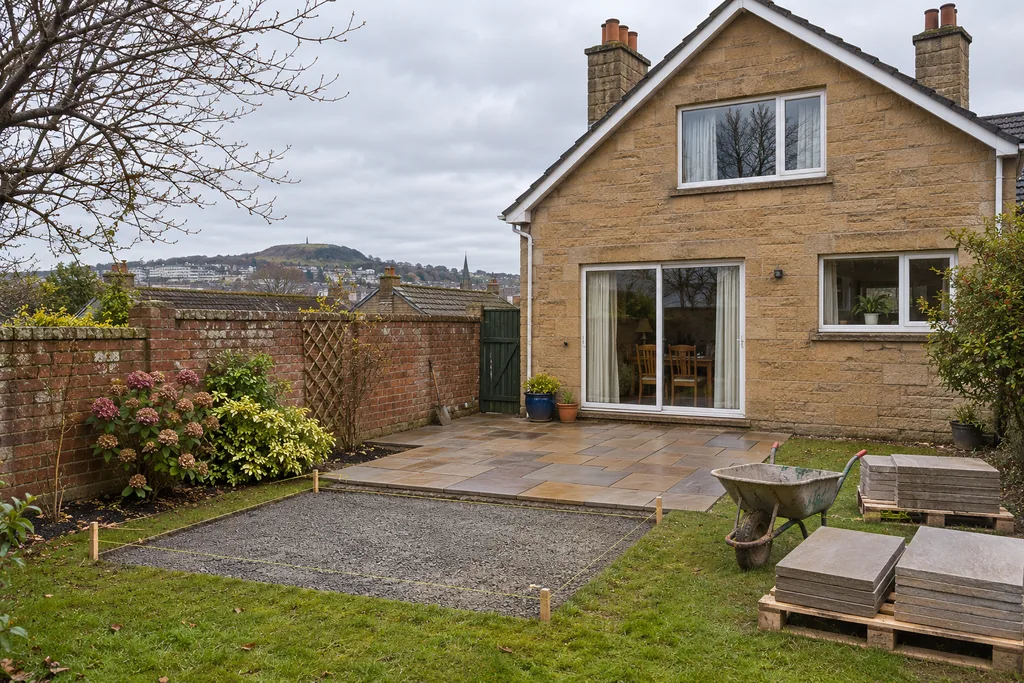
Paving installation
in Dundee
Here is how a paving job runs, in the order it happens.
- Levels and drainage set out before digging
- A compacted base, built in layers
- Joints filled and the site left clean
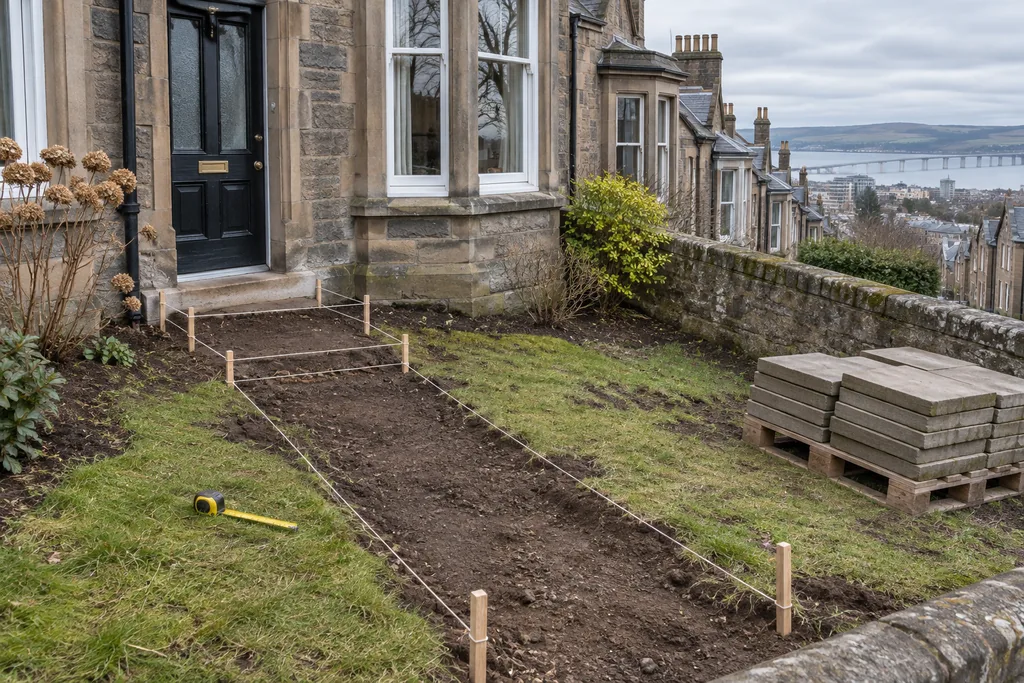
Step one: measure, mark out and decide the fall
Before a spade goes in, we walk the site: the house wall, damp-proof course, drains, gate widths and slope. Then we mark out and decide where the water goes.
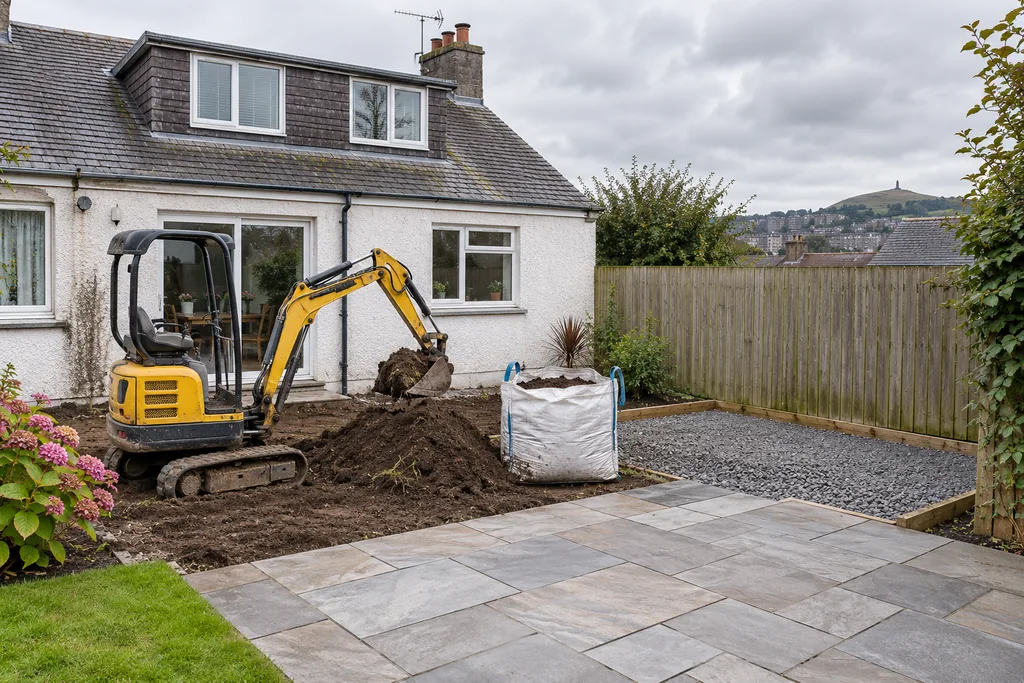
Step two: dig, then build the base
The dig goes deep enough for the base and surface. A soft or wet spot is dug deeper and filled with stone, and each layer is compacted before the next.
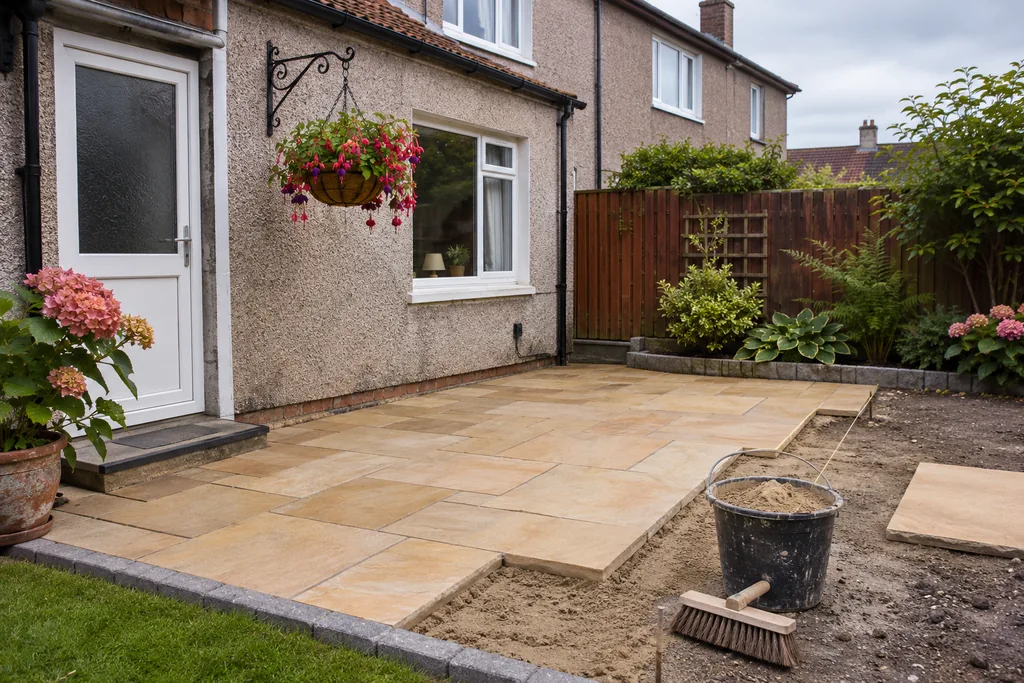
Step three: lay, joint and tidy
Slabs are set on a bed and tapped to level, and blocks go on screeded sand and are compacted. Edges are held firm, joints filled and the surface swept.

Sort these before the digger arrives
Paving installation questions
What should I check with the council before work starts?
Dundee City Council has 17 conservation areas and says permitted development limits are lower in them, and that a listed building needs consent for exterior changes (council pages, read 24 November 2026). A new drive across the pavement needs the council's consent first (Dundee City Council vehicular access page, read 24 November 2026). Paving at the front, between house and road, should be porous or drain onto porous ground (Planning Circular 1/2024, Class 3C, read 24 November 2026). A shared green or a rented home also needs the owner's agreement.
How many days will the job take?
It turns on the size, the ground and the weather. We give a realistic time after we have seen the garden.
Will you cart away the old slabs and soil?
Yes, as part of the dig, if you want it included. Ask for it in the quote.
Is it noisy and messy?
Digging and compacting are noisy for a day or so, and there will be soil and stone in the garden. We keep the site tidy and sweep up at the end.
Can you get a barrow down a narrow path or lane?
Usually. Tell us the narrowest point, because it changes how much labour the job needs.
What if it rains?
Wet weather can hold up laying.
What is the next step?
Ring us on 01382 915053, or put your postcode in the contact form.