
Why paving goes green
Moss and algae need three things: damp, shade and a surface to hold on to. Take away one and they struggle. Dundee gardens often give them all three. Rain is regular, fences and hedges throw long shadows, and a patio close to a wall stays wet well after the weather clears.
The surface matters as well. Rough or porous paving holds water and grit, and that is where growth starts. A smooth, dense slab holds less. No slab is immune, though, and every patio needs some upkeep.
Look at where your own paving turns green. The pattern tells you why. A strip along a wall points to damp from the wall. A patch under a tree points to shade and leaf mould. A hollow where water sits points to a fall problem.
Fixing the cause first
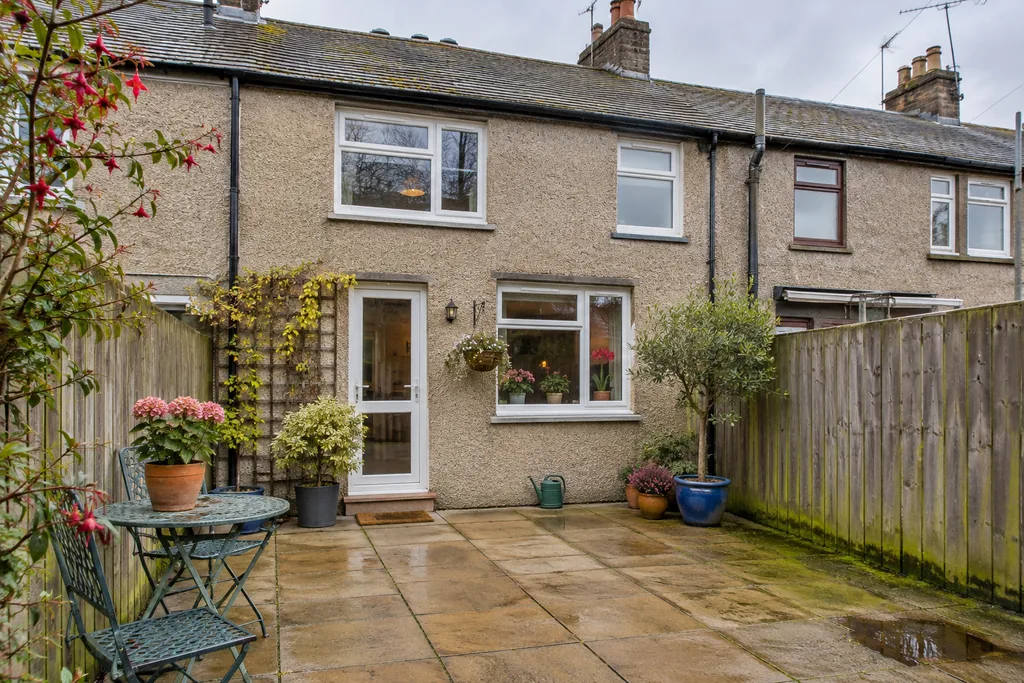
Scrubbing a patio every spring is a chore if the cause stays put. So, start with the cause.
- Water that sits. Paving needs a gentle fall away from the house so rain can run off. If water stands in a dip, the base may have settled. We explain the signs in our guide to paving a sloping garden.
- Shade. Cut back a low branch or thin a hedge, and the patio gets more air and light. A small change can make a big difference.
- Leaves and soil. Wet leaves rot into a film that feeds moss. Soil washed on from a border does the same. Sweep these off, and keep beds below the paving level where you can.
- Wall damp. A damp wall keeps the paving beside it wet. A small gap between wall and paving helps air reach the stone.
A simple routine
A little often beats a big clean once a year.
- Sweep every week or two in autumn, when leaves fall.
- Brush with a stiff broom and water in spring, and again if it gets slippery.
- Wash gently. A garden hose and a brush will clear most films. A pressure washer can strip joint sand and scar softer stone, so keep it low and at a distance if you use one. Check the slab maker's advice first.
- Top up the joints with sand if the washing has taken some out.
Cleaning products can mark some stone and harm plants in the border. Read the label, and follow the paving maker's advice on what is safe for your slab.
Do not leave it all to spring. Algae grows through the cool, damp months, so a quick brush in late autumn stops a thin film from building into a slick coat by January. Five minutes with a broom while the leaves are still dry is worth an afternoon of scrubbing later.
Weeds in the joints
Weeds need a pinch of soil. Seeds blow in, land in a joint, and find just enough.
- Brush out the joint debris before it turns to soil.
- Pull small weeds when the ground is damp. They come out with the root.
- Refill the joint with fresh jointing sand. A firm joint leaves less room for seed.
Slab patios laid with tight, full joints give weeds little room. Block paving relies on sand between the blocks, so it benefits from a top-up every so often. Paths along a border pick up the most seed, because the border supplies it.
Winter ice and frost
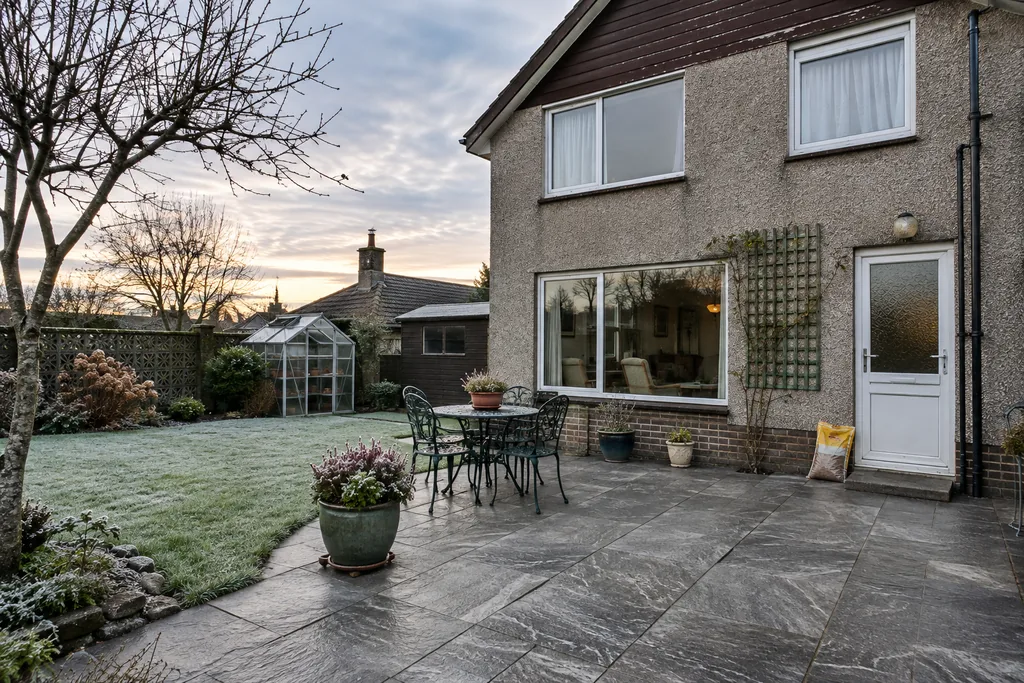
In a cold snap, paving turns from nuisance to hazard. A wet patio that freezes overnight is slick, and the back door is the place people fall.
- Clear it early. Sweep off snow before it packs down. Packed snow turns to ice.
- Use grit or sand, not salt, on stone. Salt can mark some surfaces. Check the paving maker's advice. Rock salt can also harm lawns and beds.
- Fix the wet spots. Ice forms where water sits. A good fall means fewer sheets of ice.
- Watch the shaded corners. They stay frozen longer, because the sun never reaches them.
If a step is the worst place, add grip there with a textured finish, and light it. A step you cannot see clearly in the dark is a step people miss.
Keep a spare bag of grit somewhere dry and close to the back door. Forecasts change fast, and nobody wants to dig for a bag at six in the morning with frost on the ground.
Choosing paving that stays cleaner
If you are planning a new patio, you can design out much of the work.
- Choose a textured outdoor finish. It grips better and hides marks.
- Make sure the paving falls away from the house, and tell the installer where your drains are.
- Keep planting a little back from the edge, so soil does not wash on.
- Place seating where it catches sun, if you can.
Porcelain suits people who want a wipe-clean surface, and sandstone suits those who like a natural face and accept a brush now and then. Compare them on our porcelain and sandstone pages. Our patio page explains how we set size, material and drainage together.
Questions to ask before you pave
- Which way will the rain run?
- What finish gives grip when wet?
- How tight are the joints, and what fills them?
- What does the maker say about cleaning?
- How is the edge finished, to keep soil off?
Questions
How often should I clean my patio?
Sweep often and wash when it turns green or slippery. Little and often works best.
Is a pressure washer safe on paving?
It can strip joint sand and damage some stone. Use it with care and check the maker's advice first.
Why does my paving go green in one corner?
That corner is probably damp or shaded, or water sits there.
Does salt harm paving?
It can mark some surfaces and harm planting. Use grit or sand on stone, and check the maker's advice.
Will weeds come back after I clear them?
Some will, until the joints are firm and full. Regular brushing helps.