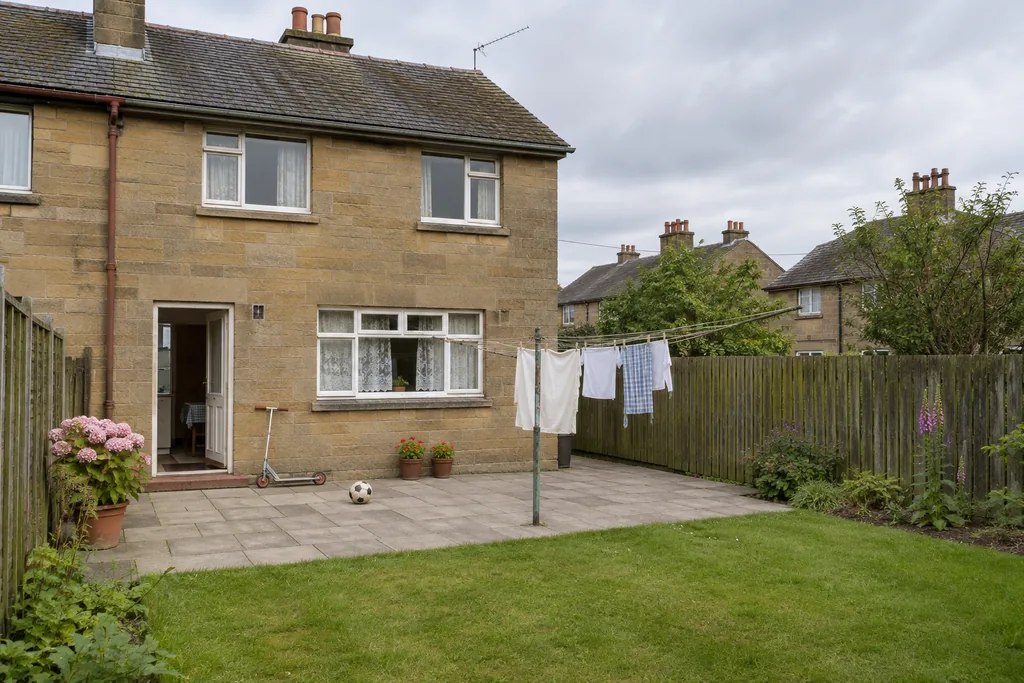
Start with who uses the garden
A patio in a family garden is not a showpiece. It is a floor. It takes scooters, tricycles, chalk, spilled juice and a barbecue on a Saturday. It sees wet footprints from the back door all year.
So the first question is not "what slab do I like?" It is "who uses this space, and what do they do on it?" The answers decide the size, the position and the surface.
Write a short list before you call anyone. Who plays out there, and how old are they? Does anyone cycle, scoot or kick a ball on the paving? Do you eat outside, and for how many? Is there a dog that comes in with wet paws? Does anyone need step-free access, or room for a pushchair or a wheelchair? It will make every conversation about the job easier, and it stops you paying for space or features you will never use.
How big should the patio be?
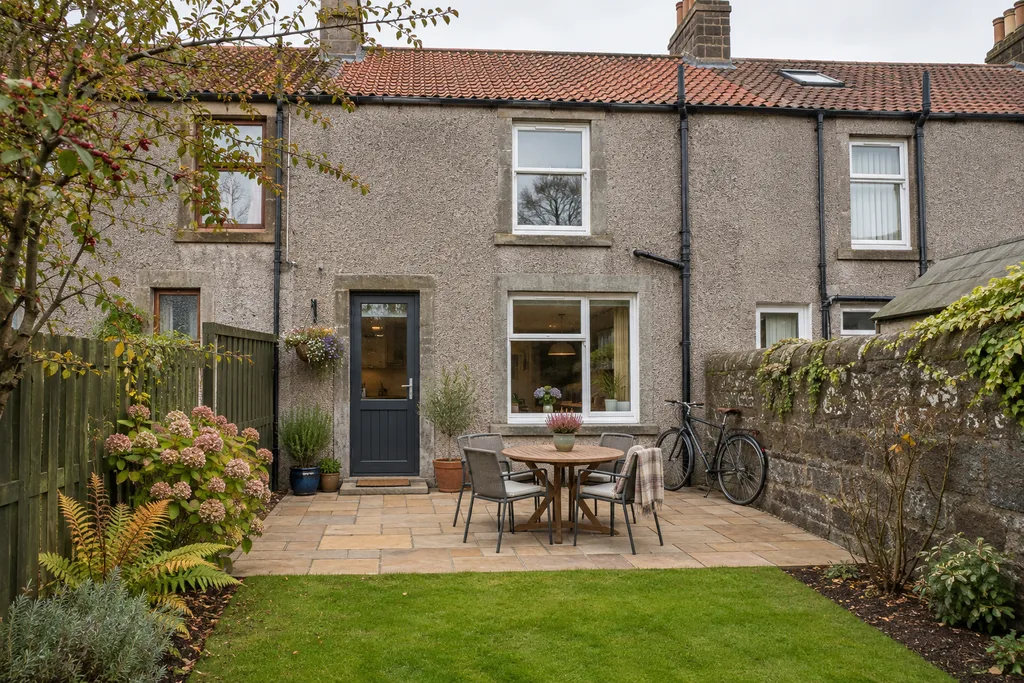
Most people go too small. A patio that looks big on paper turns out cramped when the table, the chairs and a barbecue are on it. A few measurements help.
- A table for four needs about three metres by three, with the chairs pulled out.
- A table for six wants more, and a bigger table needs a bigger clear space around it.
- A barbecue needs a metre or more of clear ground on every side.
- A path across the patio, to the lawn or the shed, is worth keeping open.
If the garden is small, one large patio across the back often beats two small areas. If the garden is wide, a smaller patio with a path to the lawn can look better.
Where to put it
The back door is the obvious spot, because it gives a short trip with trays and plates. But sun matters just as much. A patio that sits in shade all afternoon is cold in spring and damp in autumn.
Walk the garden at different times. Note where the sun lands after work. In many Dundee gardens, a slightly detached patio at the far end catches evening light that the one by the house misses. A path links the two. It means the family can follow the sun through the day, and the area by the house stays practical for everyday use while the far end becomes the place to sit with a drink.
Slopes also come into it. If the garden falls or rises, you may need a level platform. Our sloping garden guide covers it.
Which surface copes best
There is no perfect slab. Each one trades something against something else.
- Porcelain. A dense, flat slab that sweeps and wipes clean. It resists stains and does not hold on to moss. Choose a textured finish and check the slip rating. Porcelain paving
- Sandstone. Natural, warm and a little uneven. It hides scuffs well. It needs an occasional brush in shaded spots. Sandstone paving
- Block paving. Small blocks lock together and can be repaired a patch at a time. A good choice if the patio doubles as a play area, or links to a drive. Block paving
Mid-tones such as warm greys and buffs forgive dirt, leaves and chalk. Very dark slabs show dust. Very light slabs show every footprint.
Safety and cleaning
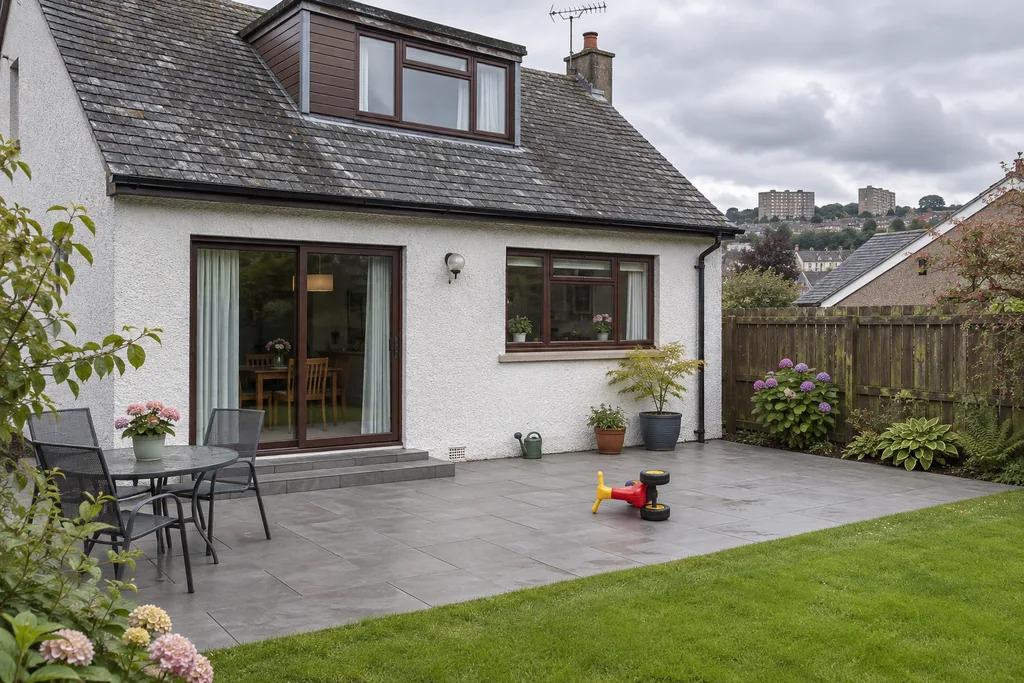
A family patio should be safe for small feet and easy to look after.
- Grip. Wet slabs can be slippery. Pick a finish with some texture, especially near the back door.
- Even joints. A flat surface with tight joints is easier on bare feet and wheels.
- Falls. A gentle slope so water leaves the patio and does not pool.
- Edges. A firm, flush edge between the patio and the lawn avoids trips.
- Cleaning. A brush and a hose are enough most of the time. Pressure washing is an option for tougher marks, but go gently on natural stone.
None of these is expensive to get right if it is planned from the start. All of them are annoying to fix later.
Planning for the future
Families change. A sandpit becomes a swing, then a trampoline, then a place for teenagers to sit. A patio that was big enough last year may be small next year.
If you can, leave room to extend. A patio laid with an edge that can be opened up later costs less than a patio that has to be lifted. Likewise, think about where the bins, the bikes and the washing line will go, so they do not end up in the middle of your nice new patio. And think about the route for a future path, steps or a shed base while the digger is already there.
Before you book
Use this short list.
- Measure the space and the furniture.
- Note where the sun falls.
- Check where the water goes in heavy rain.
- Ask whether the quote includes the dig, the base, the edging and the removal of old paving and soil.
- Check the council's rules if your house is listed or in a conservation area. Dundee City Council has 17 conservation areas and says the limits of permitted development are lower inside them (council pages, read 24 November 2026).
Our patios page explains how we build one, and the costs page lists what a good quote should include.
Questions
How long should a family patio last?
A patio laid on a deep, compacted base is built to stand up to family use. We make no promises about length of life on this page.
Can I have a patio and a lawn for the kids?
Yes. Many families pave the part near the house and keep the rest as lawn.
Is it safe for toddlers?
Choose a textured slab, keep joints tight and keep the surface clean.
Can the patio be extended later?
It can, if the edge is planned for it. Mention it in your first call.
Do I need permission?
Usually a back garden patio is a small job, but ask Dundee City Council if you are in a conservation area or the house is listed.